Long before the first European ship ever crested the horizon of the South Pacific, the islands of French Polynesia were already adorned — not in gold or silk, but in ink pressed into living skin. Polynesian tattooing is one of the oldest, most refined, and most spiritually significant artistic traditions in human history. To understand it is to look into the very soul of a civilisation that measured its worth not in wealth, but in wisdom, lineage, and connection to the divine.
Exploring the history of tattooing French Polynesia reveals deep cultural meanings and spiritual connections that endure to this day.
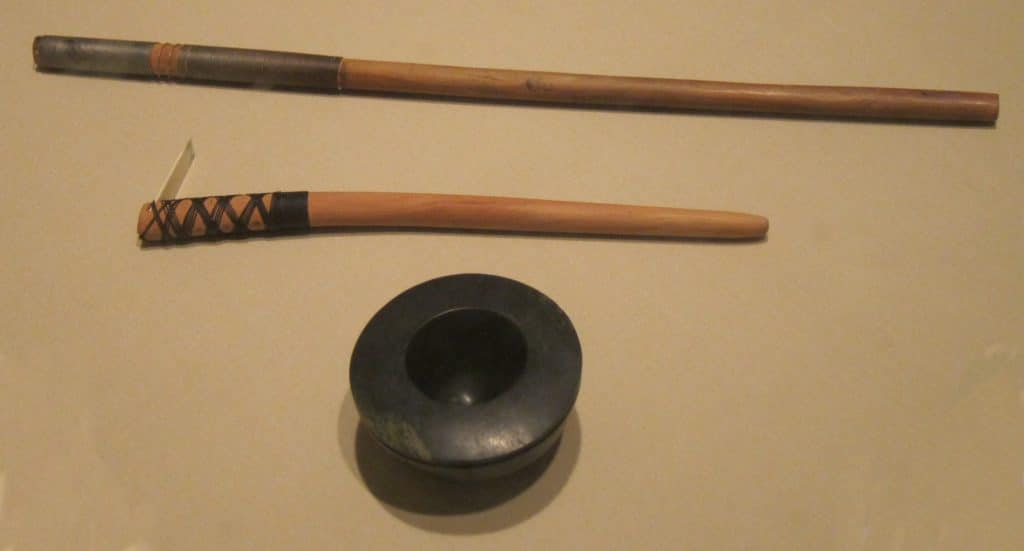
By Haa900 - Own work, CC0, https://commons.wikimedia.org/w/index.php?curid=21934975
Origins: When Skin Became Sacred
The Word Itself
The English word 'tattoo' comes directly from the Polynesian word tatu or tatau, meaning 'to mark' or 'to strike twice' — a reference to the rhythmic tapping of tools against skin. It was Captain James Cook's crew who brought the word back to Europe after their 18th-century Pacific voyages, and it has remained in the global lexicon ever since. In this sense, the very language of body art owes its existence to Polynesia.
Mythological Roots
Traditional Polynesian oral history attributes the origin of the tattoo to the twin sons of Ta'aroa — the supreme creator god — named Mata Mata Arahu and Tu Ra'i Po. According to legend, these divine brothers were the first to practice the art of tattooing, and they shared their knowledge with humanity as both a gift and a rite of passage. The tattoo was never merely decorative: it was a bridge between the mortal and the divine.
The Tools of Ancient Masters
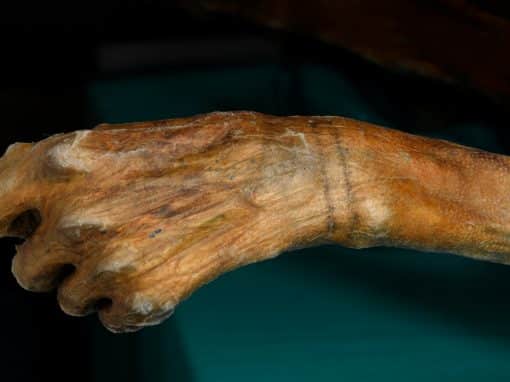
Before steel needles or electric machines, Polynesian tattoo artists — known as tahu'a ta tatau — wielded instruments carved from bone, shark teeth, turtle shell, and wood. The ink was made from candlenut soot mixed with water or coconut oil. The process was long, painful, and deeply ceremonial. An apprentice tahu'a would spend years learning not just technique, but the complex visual language encoded in every motif.
A Living Library
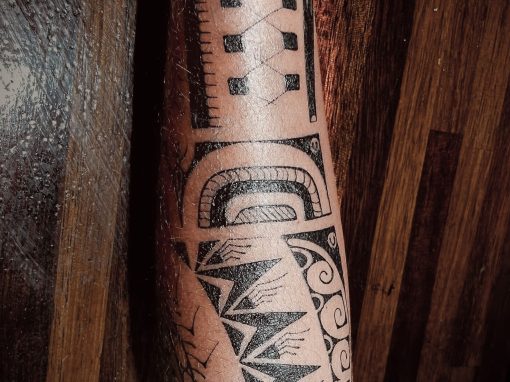
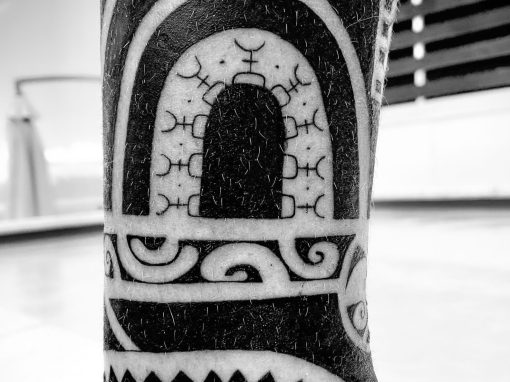
Because traditional Polynesian societies had no written language, the body served as a permanent manuscript. A person's tattoos told their story: their genealogy, their social rank, their spiritual affiliations, their achievements in war or navigation, and the islands they called home. The more tattooed an individual, the more experience — and spiritual mana (power) — they were believed to carry.
Colonisation and the Near-Extinction of Tatau
When European missionaries arrived in earnest in the early 19th century, they viewed tattooing as pagan and immoral. By the 1820s, Christian missions had succeeded in banning the practice across much of French Polynesia, including in the Marquesas Islands — historically the heartland of Polynesian tattoo artistry. The sacred designs, passed down through generations, began to fade from skin and from memory.
The Marquesan Tradition: Almost Lost
The Marquesas Islands (Fenua 'Enata, 'The Land of Men') once produced some of the most elaborately tattooed individuals in the world. European explorers described full-body tattooing of such complexity and beauty that it left them speechless. The near-total suppression of this tradition over 150 years left a cultural wound that would take the better part of the 20th century to begin healing.
The Great Revival: Reclaiming Identity Through Ink
The modern renaissance of Polynesian tattooing began in the 1980s, fuelled by a broader movement of cultural pride and indigenous identity. Artists and scholars — many of them Polynesian themselves — began working to reconstruct the visual vocabulary of tatau from museum collections, historic photographs, early European sketches, and the memories of elders.
Tavita and the New Generation
Today, Tahiti and the Marquesas are home to a new generation of master artists who blend rigorously researched traditional motifs with contemporary precision tools. Studios in Papeete serve both local Polynesians reconnecting with their heritage and travellers who wish to carry a piece of the Pacific home in the most permanent way possible. The tattoo, once nearly extinguished, has become one of the most powerful symbols of Polynesian cultural survival.
Tattooing in Tahiti Today
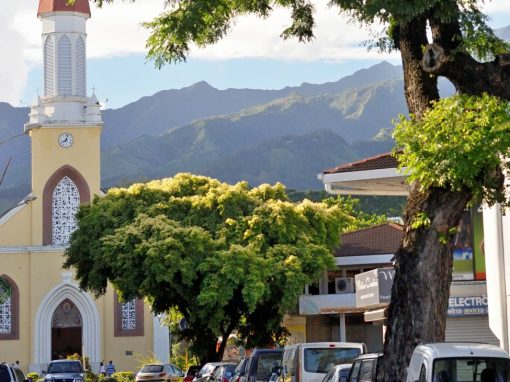
In Papeete, the capital of French Polynesia, tattoo studios sit alongside pearl boutiques and vanilla farms as emblems of the island's identity. Getting a traditional Polynesian tattoo in Tahiti is not just a souvenir — it is a participation in a living tradition that stretches back over three thousand years. Each line, spiral, and symbol speaks across centuries, carrying the weight of ancestors and the whisper of the sea.
Source: Smithsonian Magazine — Tattoo History: https://www.smithsonianmag.com | Te Fare Tauhiti Nui (Maison de la Culture, Papeete): https://www.maisondelaculture.pf